Feeling better
starts now.
Our mental health specialists provide compassionate care and prescribe clinically proven medications to treat ADHD, anxiety, depression, bipolar disorder, and insomnia.
We offer medication management for mental health conditions such as ADHD, anxiety, depression, insomnia, and bipolar disorder.
ADHD may show up as procrastination, not from lack of care, but because initiating tasks can feel like pushing a stalled car until momentum finally kicks in.
Anxiety is the sensation of waiting for bad news that never arrives, living in a constant pre-storm atmosphere where your muscles brace and your thoughts refuse to settle.
Depression can make your body ache without a clear reason, adding heaviness to limbs, tightness to chest, and a constant sense that energy has been rationed elsewhere.
Bipolar disorder may involve hypomania, a milder elevation with increased productivity and talkativeness, or mania, which can become intense, risky, and impairing without treatment.
Insomnia is the mismatch between exhaustion and shutdown, when your muscles feel heavy but your thoughts stay bright, scanning endlessly for threats, lists, and imagined conversations.
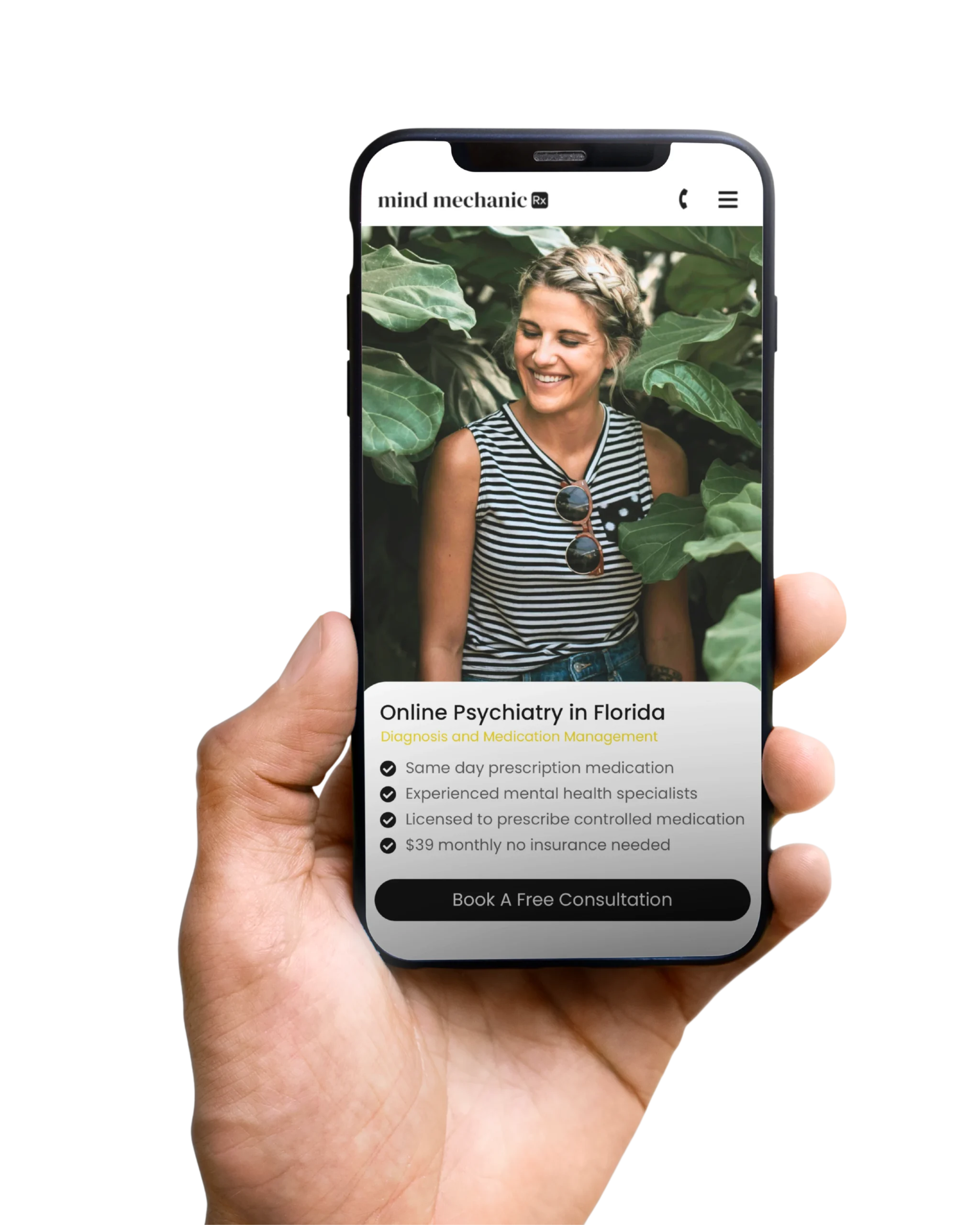
Great care should feel approachable, not intimidating. Our online psychiatry services offer private video visits, clear next steps, and consistent follow up without the hassle of traditional systems. You can meet with a clinician from home and message securely between appointments for guidance, refills, or symptom updates. Our online psychiatry services are available across Broward County. We focus on evidence based treatment, careful safety review, and transparent conversations about side effects and expectations. By removing barriers and improving responsiveness, we help patients stay engaged in care and feel supported through changes, milestones, and everyday life.
It’s time to prioritize your well-being. Start your mental health journey now and take control with convenient, expert psychiatric care from home.
Anxiety is the brain’s threat detector running hot, sending alarms when uncertainty feels like danger. Psychiatry helps tune that signal by combining skills with medication when needed. SSRIs and SNRIs can reduce baseline worry, while other options may help with short spikes, depending on risks and history. Visits also explore caffeine, sleep loss, and avoidance loops that keep anxiety training itself. When the alarm quiets, people can practice exposures, make decisions without overchecking, and let discomfort pass without chasing certainty. The long game is flexibility, not perfection. Over time, the aim is confidence: responding to fear signals with choices instead of automatic avoidance.
Parkland is known for driven families and high expectations, which can sometimes create pressure and emotional strain. High achievers may struggle with anxiety, perfectionism, or burnout while appearing successful on the outside. Mental wellness involves learning to rest, set realistic goals, and practice self compassion. Therapy can help individuals manage stress, improve emotional regulation, and build healthier perspectives around achievement. Support is not a sign of weakness, it is a tool for sustaining long term success and inner stability.
Parkland is known for its strong family community, but busy family schedules can still create emotional strain. Parents and children may juggle school demands, extracurricular activities, and work responsibilities. Over time, stress can lead to anxiety, irritability, or burnout. Mental health care can help individuals and families develop healthier routines, improve communication, and build coping skills that support long term emotional wellness.
Teenagers in Parkland may face academic pressure, social challenges, and high expectations. Anxiety, depression, ADHD symptoms, or low self esteem can emerge during adolescence. Teens may struggle with mood swings, motivation, or feeling overwhelmed. Counseling provides a safe space to express emotions and learn coping tools. Early mental health support can strengthen resilience, confidence, and healthy development during important life stages.
Anxiety can interfere with everyday life by causing constant worry, restlessness, and difficulty concentrating. Parkland residents may feel stressed about work, family responsibilities, or future uncertainties. Anxiety can also impact sleep and physical wellbeing. Therapy and psychiatric care can help identify triggers, reduce symptoms, and build practical coping strategies. With support, many individuals regain calm, confidence, and emotional balance.
Depression often involves more than sadness. Parkland residents may notice low energy, loss of interest in activities, changes in appetite, sleep problems, or feeling emotionally disconnected. Some individuals continue functioning outwardly while struggling internally. Treatment may include therapy, medication management, and lifestyle support. Seeking help early can prevent symptoms from worsening and support a return to motivation and emotional wellbeing.
Chronic stress can make it difficult to fall asleep or stay asleep, leading to fatigue and mood changes. In Parkland, busy schedules and constant responsibilities may contribute to insomnia. Poor sleep can worsen anxiety, depression, and irritability. Mental health care often addresses both stress management and healthy sleep routines. Improving rest can strengthen emotional resilience and overall quality of life.
Psychiatric care in Parkland typically focuses on personalized support for emotional and behavioral concerns. Providers may help with anxiety, depression, ADHD, bipolar disorder, or sleep issues through evaluations and ongoing treatment plans. Care may include medication management, therapy referrals, and coping strategies for daily life. The goal is long term stability, improved functioning, and supportive guidance for both individuals and families.
Reviewed by Mind Mechanic Clinical Oversight
Last updated: January 28, 2026
