Feeling better
starts now.
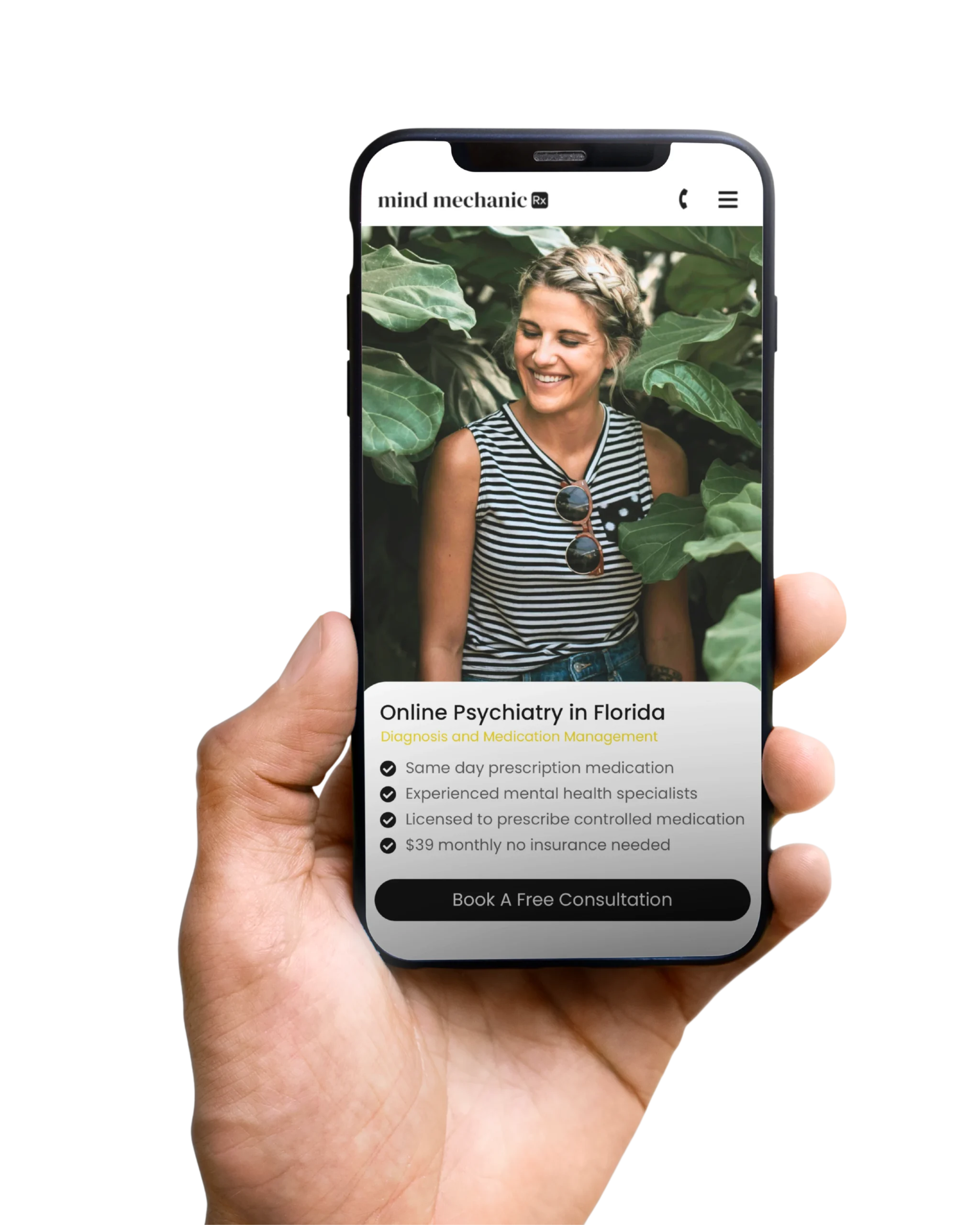
Our mental health specialists provide compassionate care and prescribe clinically proven medications to treat ADHD, anxiety, depression, bipolar disorder, and insomnia.
We offer medication management for mental health conditions such as ADHD, anxiety, depression, insomnia, and bipolar disorder.
ADHD can include emotional intensity, where feelings shift quickly and rejection sensitivity can be strong, making interpersonal stress feel sharper and harder to shake off.
Anxiety can show up as stomach flips, nausea, or bathroom urgency, because the nervous system redirects energy for survival, turning digestion into collateral during false alarms.
Depression is losing trust in tomorrow, assuming effort won’t matter, and feeling trapped in a loop where hope seems naïve and relief feels permanently out of stock.
Bipolar disorder often affects sleep, with reduced need during manic phases and oversleeping or insomnia during depressive phases, creating an exhausting push-pull in the body.
Insomnia is when the bed becomes a thinking chair, and the brain treats darkness like office hours, opening files of regrets, deadlines, and what-ifs until dawn interrupts the meeting.
Access is the foundation of effective care, not a bonus feature. Our online psychiatry services are built to reduce delays and keep communication open, so patients do not feel stranded between appointments. Our practice supports communities throughout Broward County. We offer secure telehealth visits, streamlined onboarding, and scheduling that works around work, school, and family demands. Treatment is personalized and grounded in evidence, with careful monitoring for safety and progress. Patients can message their provider for clarification, medication concerns, or symptom updates. By making care easier to start and easier to continue, we support better outcomes and a better experience.
It’s time to prioritize your well-being. Start your mental health journey now and take control with convenient, expert psychiatric care from home.
Obsessive-compulsive disorder is driven by intrusive thoughts and the rituals meant to neutralize them. The most effective psychotherapy is exposure and response prevention, where a person practices tolerating uncertainty without performing the compulsion. Psychiatry can support ERP with medication, commonly SSRIs at higher doses, and by coaching around setbacks and reassurance traps. A careful clinician distinguishes OCD from generalized worry, psychosis, or perfectionism, because the treatment strategy is different. Progress is often “quiet,” measured by minutes of resisting rituals, not dramatic emotional breakthroughs. Over time, patients learn the thought can exist without being obeyed. Progress is measured by freedom: shorter rituals, fewer reassurance checks, and more time back for life.
Southwest Ranches offers privacy and space, yet mental health needs remain universal. Many individuals prefer discreet support when navigating anxiety, mood disorders, or life transitions. Telehealth and confidential counseling provide accessible care without disrupting daily routines. Mental wellness involves understanding emotions, improving coping skills, and strengthening relationships. Even in quiet settings, stress and depression can still arise. Professional support helps individuals feel grounded, supported, and equipped to handle challenges with greater confidence.
Southwest Ranches offers a peaceful, spacious environment, but quiet living can still come with emotional challenges. Some residents may feel isolated or disconnected if social opportunities are limited. Others may experience stress from balancing work demands with a more private home life. Mental health care can help individuals maintain emotional balance, strengthen coping strategies, and build supportive routines that promote wellbeing in a quieter community setting.
Social disconnection can impact emotional health over time. In Southwest Ranches, individuals may feel lonely if friends, work, or activities are spread out. Isolation can increase the risk of anxiety, depression, and emotional fatigue. Therapy can provide support while also helping individuals build confidence in forming relationships and creating meaningful routines. Strong mental wellness often includes both personal peace and healthy social connection.
Even in a calm environment, families in Southwest Ranches may face stress from parenting demands, work responsibilities, and busy schedules. Stress can show up as irritability, exhaustion, or difficulty communicating at home. Mental health care can help families develop healthier coping tools, improve emotional regulation, and strengthen relationships. Supportive treatment encourages balance so that family life feels more connected and less overwhelming.
Yes, anxiety often affects the body as well as the mind. Southwest Ranches residents may experience muscle tension, headaches, fatigue, rapid heartbeat, or stomach discomfort. These symptoms can occur even when someone does not feel anxious emotionally. Mental health treatment can help identify triggers and teach relaxation strategies. Therapy and psychiatric care can reduce both physical and emotional symptoms, helping individuals feel calmer and more in control.
Insomnia can make it harder to manage stress and emotions. Southwest Ranches residents who struggle with sleep may feel irritable, unfocused, or emotionally drained during the day. Poor sleep can worsen anxiety and depression over time. Mental health care often addresses both sleep habits and underlying emotional concerns. Improving rest can strengthen resilience, mood stability, and overall quality of life.
Psychiatric support in Southwest Ranches typically involves a personalized approach to understanding mental health needs. Providers may help treat anxiety, depression, ADHD, bipolar disorder, or sleep issues through evaluation and medication management when appropriate. Care often includes therapy referrals and coping strategies for daily life. The goal is long term emotional stability, improved functioning, and compassionate support tailored to each individual.
Reviewed by Mind Mechanic Clinical Oversight
Last updated: January 28, 2026
