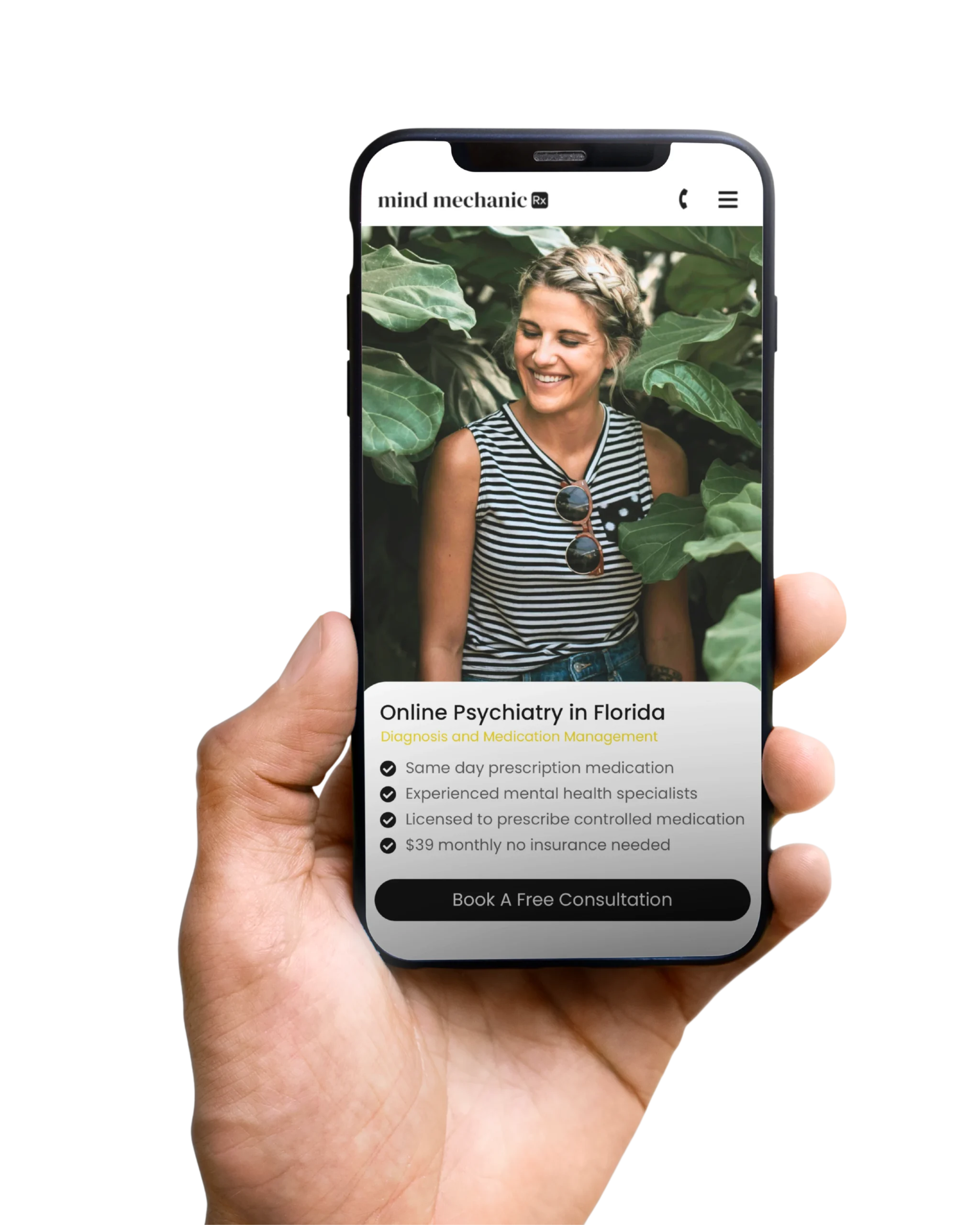
Feeling better
starts now.
Our mental health specialists provide compassionate care and prescribe clinically proven medications to treat ADHD, anxiety, depression, bipolar disorder, and insomnia.
We offer medication management for mental health conditions such as ADHD, anxiety, depression, insomnia, and bipolar disorder.
ADHD is a condition where attention is inconsistent, not absent, so focus may lock in deeply on interests while everyday responsibilities feel harder to maintain.
Anxiety is feeling overstimulated from the inside, where silence becomes loud, small sensations feel amplified, and relaxation feels strangely unfamiliar or hard to trust.
Depression can distort time, making minutes drag and weeks vanish, so you feel both stuck and behind, watching life continue while you struggle to stay present.
Bipolar disorder is a condition where mood regulation becomes unstable, causing shifts between emotional lows and highs that are more intense and lasting than typical reactions.
Insomnia can be falling asleep quickly, then waking at 2 a.m. with a wide-open mind, unable to return, as if someone flipped the switch from night mode to day.
Modern psychiatry can be high quality and easy to reach at the same time. We serve multiple cities and communities across Broward County. We provide secure virtual appointments that protect privacy and reduce the stress of travel or missed work. From the first visit, we focus on listening, accuracy, and a shared plan that fits your life, whether that includes medication, therapy referrals, or structured strategies. Secure messaging allows timely questions and updates between sessions, strengthening monitoring and safety. By simplifying the process without cutting corners, we help patients stay engaged and supported while their care adapts to real world needs.
It’s time to prioritize your well-being. Start your mental health journey now and take control with convenient, expert psychiatric care from home.
Panic attacks can feel like a medical emergency: racing heart, chest tightness, dizziness, and a terrifying sense of doom. Psychiatric care starts by ruling out medical causes when symptoms are new, then explaining the fight-or-flight loop that fuels panic. Treatment often combines interoceptive exposure, breathing retraining, and medication options that lower sensitivity to adrenaline surges. People also learn to stop body-checking, which unintentionally keeps the alarm activated. Many benefit from a “panic script” that names the sensations, predicts their peak, and refuses to bargain for certainty. With practice, attacks become shorter, less scary, and less frequent. Many patients improve by practicing the sensations on purpose, teaching the brain that discomfort isn’t catastrophe.
Weston families often focus on creating stable, supportive environments, making family centered mental health care especially valuable. Stress can affect parents, children, and relationships in interconnected ways. Family therapy and counseling can improve communication, reduce conflict, and strengthen emotional bonds. Children benefit when parents model healthy coping strategies. Mental wellness is not just individual, it is shared within households. With the right support, families can navigate challenges together and build healthier long term patterns.
Weston is known for strong schools and professional success, which can create pressure to constantly perform. Many residents manage demanding careers, academic expectations, and busy family schedules. Over time, this pressure can contribute to anxiety, burnout, or difficulty relaxing. Mental health care can help individuals develop coping strategies, set healthier boundaries, and maintain emotional balance while pursuing goals in a high achieving community.
Families in Weston often juggle school activities, work demands, and packed routines. Stress overload may show up as irritability, exhaustion, trouble sleeping, or frequent tension at home. Children and adults may feel emotionally overwhelmed when schedules leave little time to recharge. Therapy and psychiatric support can help families improve communication, build healthier routines, and manage stress in ways that support long term wellbeing.
Students in Weston may experience anxiety related to academic performance, social pressure, or high expectations. Anxiety can cause racing thoughts, difficulty concentrating, test fear, or avoidance of schoolwork. Over time, it may impact confidence and emotional health. Mental health treatment can help students develop coping tools, reduce stress responses, and build resilience. Early support can improve both wellbeing and academic success.
Yes, ADHD often continues into adulthood. Weston adults may struggle with organization, time management, forgetfulness, or difficulty staying focused at work. These challenges can lead to frustration, anxiety, or low self confidence. Psychiatric care may include medication management, behavioral strategies, and lifestyle tools tailored to adult responsibilities. With proper support, many individuals improve productivity, relationships, and daily functioning.
Depression does not always look like sadness. In Weston, individuals may continue working and caring for others while feeling emotionally numb, exhausted, or disconnected. Depression can involve low motivation, sleep changes, irritability, or difficulty enjoying life. Mental health care can provide therapy, medication options, and supportive strategies. Treatment helps individuals regain emotional strength, energy, and a sense of fulfillment over time.
Psychiatric care in Weston typically begins with a detailed evaluation of symptoms, lifestyle factors, and mental health history. Providers may help with anxiety, depression, ADHD, bipolar disorder, or insomnia through medication management and treatment planning. Care often includes therapy referrals and coping strategies for daily life. The goal is long term emotional stability, improved functioning, and personalized support for each individual.
Reviewed by Mind Mechanic Clinical Oversight
Last updated: January 28, 2026
