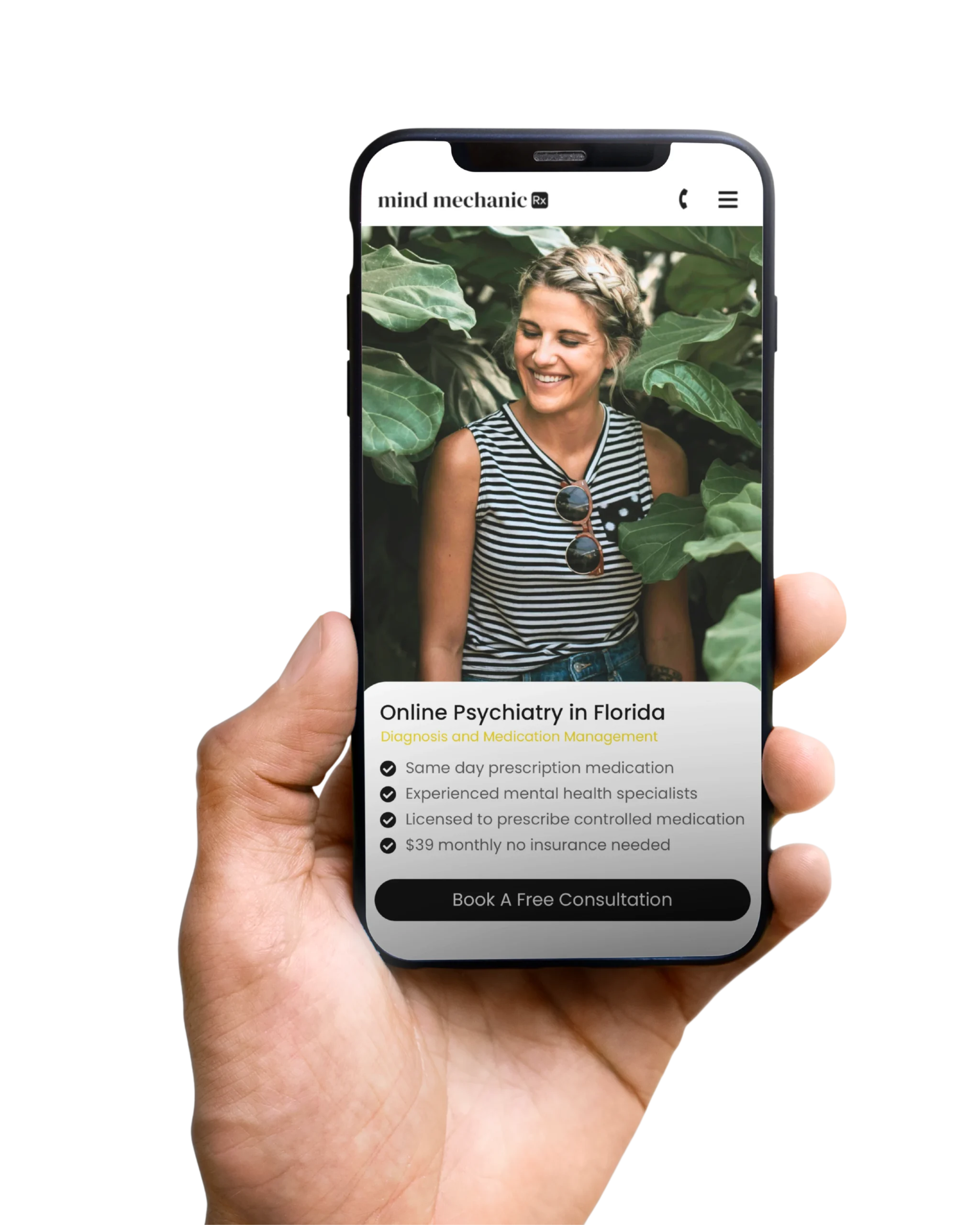
Feeling better
starts now.
Our mental health specialists provide compassionate care and prescribe clinically proven medications to treat ADHD, anxiety, depression, bipolar disorder, and insomnia.
We offer medication management for mental health conditions such as ADHD, anxiety, depression, insomnia, and bipolar disorder.
ADHD can involve impulsive decisions or interruptions, as the brain struggles to pause before acting, even when the person understands social expectations and consequences.
Anxiety can shrink your world, encouraging avoidance, so places, tasks, or social moments start feeling dangerous, even when you logically know you’re safe.
Depression is the feeling that your inner battery won’t hold charge, so you push through on fumes, smiling for others while your mind whispers, “What’s the point?”
Bipolar disorder is a cycle of mood episodes, where periods of calm can be interrupted by dramatic changes in emotion, energy, and perception that reshape daily life.
Living with insomnia means fearing the clock, watching numbers change with a sinking stomach, calculating how little rest remains, and feeling tomorrow shrink as the night keeps expanding.
Progress usually comes from steady support, not one perfect appointment. Our telepsychiatry practice is designed for continuity through secure video visits, timely access, and simple communication. Care is accessible to patients throughout Broward County. We listen closely, assess thoroughly, and create plans that may include medication management, therapy coordination, and skill based strategies. Between visits, secure messaging lets you share changes, ask questions, and address side effects early. We prioritize clarity and collaboration so you understand the plan and feel ownership over it. By making care easier to reach and easier to maintain, we support sustainable improvement over time.
It’s time to prioritize your well-being. Start your mental health journey now and take control with convenient, expert psychiatric care from home.
Bipolar disorder is defined by episodes, not personality. Treatment focuses on stabilizing mood across weeks and months, preventing both depression and hypomania or mania. Mood stabilizers and certain antipsychotics can protect sleep, reduce cycling, and lower relapse risk. A strong plan also includes routine, because irregular sleep and shifting schedules can act like a match near gasoline. Clinicians may use mood charts, medication levels when appropriate, and relapse plans that specify early warning signs. Psychoeducation helps patients spot subtle activation, like racing ideas or risky decisions, before it escalates. Families often learn early warning signs too, so support arrives before an episode gains speed.
Pembroke Pines residents may experience depression in ways that are not always obvious. Symptoms can include low energy, loss of interest, changes in sleep, or feelings of hopelessness. Depression is not simply sadness, it is a medical condition that deserves care and understanding. Treatment options may include therapy, medication, and lifestyle support. Reaching out early can prevent symptoms from worsening. With the right guidance, individuals can regain motivation, connection, and a sense of purpose.
Pembroke Pines is a busy, family oriented community where many residents juggle careers, parenting, and daily responsibilities. Constant multitasking can lead to stress, anxiety, or emotional fatigue. Some individuals feel overwhelmed trying to meet everyone’s needs while neglecting their own wellbeing. Mental health care can help residents build healthier routines, set boundaries, and develop coping strategies that support balance and long term emotional wellness.
Anxiety can show up in many forms, including racing thoughts, restlessness, irritability, or trouble sleeping. Pembroke Pines residents may feel constantly on edge due to work demands, family pressures, or social stress. Anxiety can also cause physical symptoms like muscle tension or fatigue. Therapy and psychiatric care can help identify triggers, reduce symptoms, and teach calming strategies that restore confidence and emotional stability.
Children and teens in Pembroke Pines may face academic pressure, social challenges, or emotional changes that affect mental health. Anxiety, depression, ADHD symptoms, or behavioral concerns can emerge during development. Therapy provides a safe space for young people to express feelings, learn coping tools, and improve emotional regulation. Early support can strengthen resilience, boost self confidence, and help families navigate challenges together.
Yes, chronic stress can gradually lead to burnout. Adults in Pembroke Pines may experience exhaustion, low motivation, irritability, or feeling emotionally drained. Burnout can affect work performance, relationships, and overall health. Mental health treatment can help individuals recognize early warning signs, manage stress more effectively, and rebuild balance through healthier routines. Support can restore energy and improve long term emotional wellbeing.
Insomnia can worsen both emotional and physical health. Pembroke Pines residents struggling with sleep may experience irritability, anxiety, difficulty concentrating, or low mood. Poor sleep often makes daily stress harder to handle, creating a cycle of exhaustion. Mental health care can address underlying causes of insomnia while teaching healthier sleep habits. Improving sleep quality supports stronger resilience, clearer thinking, and better mood stability.
Psychiatric care in Pembroke Pines typically involves a personalized evaluation of emotional symptoms, lifestyle factors, and mental health history. Providers may help treat anxiety, depression, ADHD, bipolar disorder, or sleep problems through medication management and supportive treatment planning. Care is often combined with therapy referrals and coping strategies. The goal is long term stability, improved daily functioning, and compassionate support tailored to each individual.
Reviewed by Mind Mechanic Clinical Oversight
Last updated: January 28, 2026
