Feeling better
starts now.
Our mental health specialists provide compassionate care and prescribe clinically proven medications to treat ADHD, anxiety, depression, bipolar disorder, and insomnia.
We offer medication management for mental health conditions such as ADHD, anxiety, depression, insomnia, and bipolar disorder.
ADHD can make time feel slippery, with difficulty estimating how long tasks take, leading to chronic lateness, rushed deadlines, and a sense of always catching up.
Anxiety can make sleep difficult, not from lack of tiredness, but from a brain that insists nighttime is the perfect time to review fears and unfinished mental business.
Depression is a relentless self-critic with a megaphone, replaying mistakes, shrinking strengths, and convincing you that your best moments were accidents.
Bipolar disorder can make someone feel intensely creative and driven during hypomania, then later struggle with slowed thinking, sadness, and loss of interest during depression.
Insomnia is a cruel paradox: the harder you try to sleep, the more you monitor yourself, and that self-checking keeps the body alert, like a guard refusing to stand down.
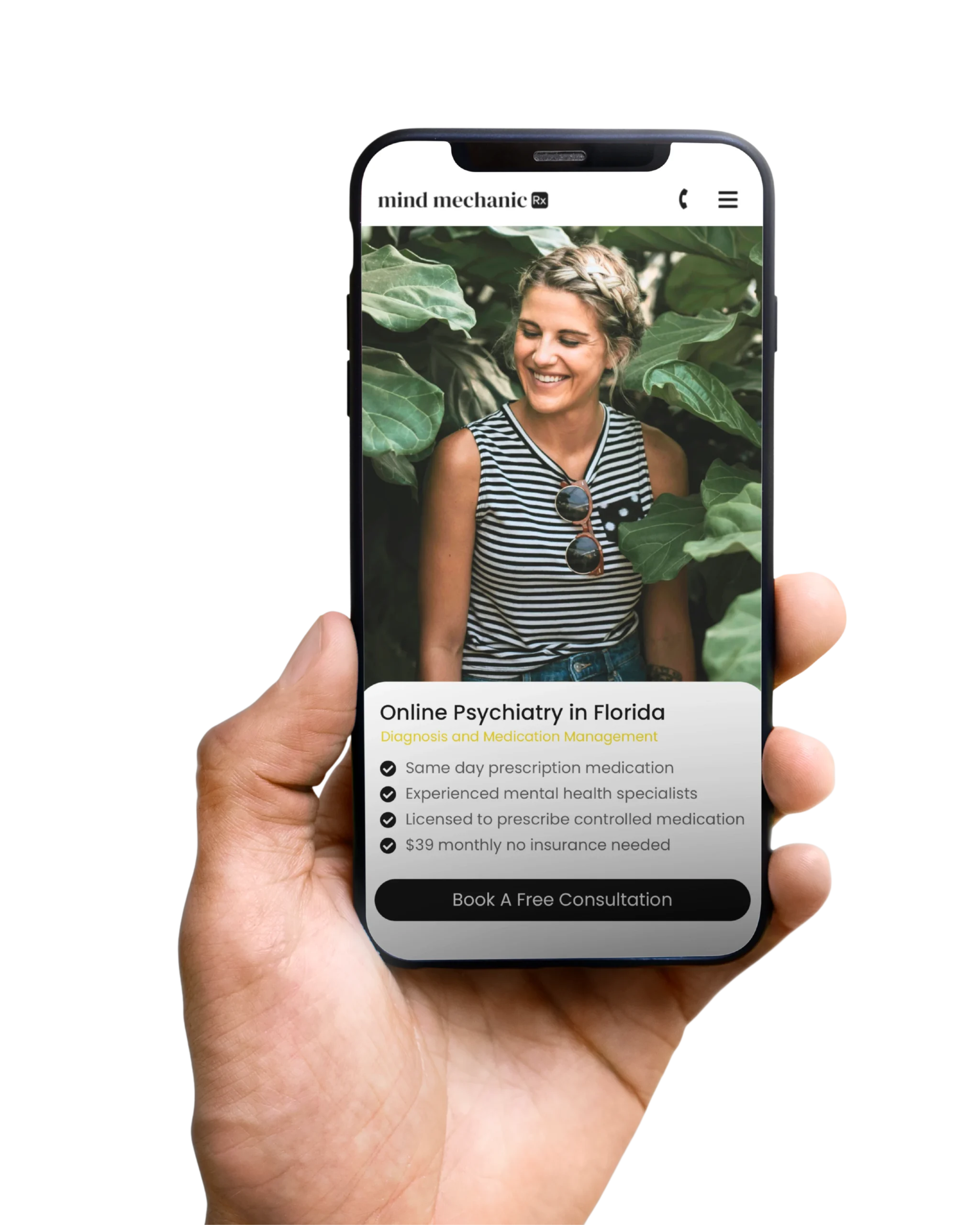
Support should arrive when you need it, not long after the moment has passed. Mental health care is available across Broward County through our practice. Our online psychiatry care offers convenient video visits, clear next steps, and ongoing access to your provider through secure messaging. We take time to understand your story, assess symptoms carefully, and recommend evidence based options with honest conversations about risks and benefits. By reducing administrative hurdles and improving responsiveness, we help patients stay engaged and informed. The mission is practical, steady care that makes progress more likely and setbacks easier to navigate, even during demanding seasons of life.
It’s time to prioritize your well-being. Start your mental health journey now and take control with convenient, expert psychiatric care from home.
PTSD is a nervous system that learned danger too well. Symptoms can include nightmares, hypervigilance, emotional numbing, and flashbacks that hijack the present. Effective care often blends trauma-focused therapy with medications that target sleep, anxiety, or mood, depending on the profile. Clinicians assess safety, substance use, and dissociation, then build stabilization skills before deeper processing. Progress can look non-linear: fewer triggers, faster recovery after reminders, and a wider window of tolerance. Sleep repair is often a keystone, because exhaustion amplifies reactivity. Treatment also respects values, helping people reconnect to relationships, work, or meaning after survival mode. Care also respects pacing, because pushing too fast can backfire and increase nightmares or numbing.
Deerfield Beach residents enjoy sunshine, but seasonal mood changes can still impact mental health. Some individuals experience shifts in energy, motivation, or sleep during certain times of year. Changes in routine, stress levels, or life circumstances can contribute. Recognizing patterns early helps people take proactive steps such as therapy, exercise, and structured schedules. Mental health care can provide strategies to stabilize mood and prevent symptoms from escalating. Support helps individuals stay emotionally steady year round.
Deerfield Beach offers a relaxing coastal setting, but mental health challenges can still arise. Some residents experience stress from busy work schedules, family responsibilities, or financial pressure despite living near the ocean. Others may struggle with anxiety or depression that is not eased by the environment alone. Mental health care can help individuals build coping strategies, improve emotional balance, and feel more grounded in daily life.
Anxiety can affect both mind and body. Deerfield Beach residents may notice constant worry, restlessness, difficulty concentrating, muscle tension, or trouble sleeping. Anxiety can also lead to avoidance of social situations or feeling overwhelmed by daily tasks. Therapy and psychiatric care can help identify triggers, reduce symptoms, and teach calming techniques. With support, many individuals regain confidence and a greater sense of emotional stability.
Grief can affect anyone and may involve sadness, numbness, irritability, or difficulty focusing. Deerfield Beach residents coping with loss may find that emotions come in waves, even long after the event. Therapy provides a safe space to process feelings, adjust to life changes, and develop healthy coping strategies. Supportive mental health care helps individuals heal at their own pace while rebuilding daily functioning.
Yes, burnout is common among individuals managing demanding careers and constant responsibilities. Deerfield Beach professionals may feel emotionally drained, unmotivated, or mentally exhausted even when life appears stable. Burnout can affect sleep, mood, and relationships. Mental health care can help individuals recognize early warning signs, set healthier boundaries, and restore balance through coping tools and supportive treatment strategies.
Insomnia can worsen stress, anxiety, and mood changes over time. Deerfield Beach residents struggling with sleep may feel fatigued, irritable, or unable to concentrate during the day. Poor sleep often creates a cycle where emotional symptoms become harder to manage. Mental health treatment can address underlying causes of insomnia while improving sleep routines. Better rest supports stronger resilience and overall emotional wellbeing.
Psychiatric care in Deerfield Beach typically involves a personalized evaluation of mental health concerns such as anxiety, depression, ADHD, bipolar disorder, or sleep issues. Providers may offer medication management, therapy referrals, and coping strategies tailored to daily life. Treatment is collaborative, focusing on long term stability rather than quick fixes. The goal is improved functioning, emotional balance, and supportive care over time.
Reviewed by Mind Mechanic Clinical Oversight
Last updated: January 28, 2026
