Feeling better
starts now.
Our mental health specialists provide compassionate care and prescribe clinically proven medications to treat ADHD, anxiety, depression, bipolar disorder, and insomnia.
We offer medication management for mental health conditions such as ADHD, anxiety, depression, insomnia, and bipolar disorder.
ADHD often involves distractibility, where external noises or internal thoughts pull attention away, making sustained concentration in quiet settings surprisingly difficult.
Anxiety is a constant internal checking, monitoring breathing, heartbeat, and thoughts, which ironically keeps the body activated, like a guard who refuses to stand down.
Depression can look like irritability, not just sadness, where patience runs thin, small problems sting sharply, and you feel guilty for snapping when you’re simply depleted.
Bipolar disorder involves changes in brain chemistry and rhythm, influencing mood, energy, and behavior in ways that can feel unpredictable without consistent care and support.
Insomnia often arrives with racing thoughts, tense shoulders, and shallow breathing, turning rest into work, and leaving you tired but wired, foggy yet strangely keyed up.
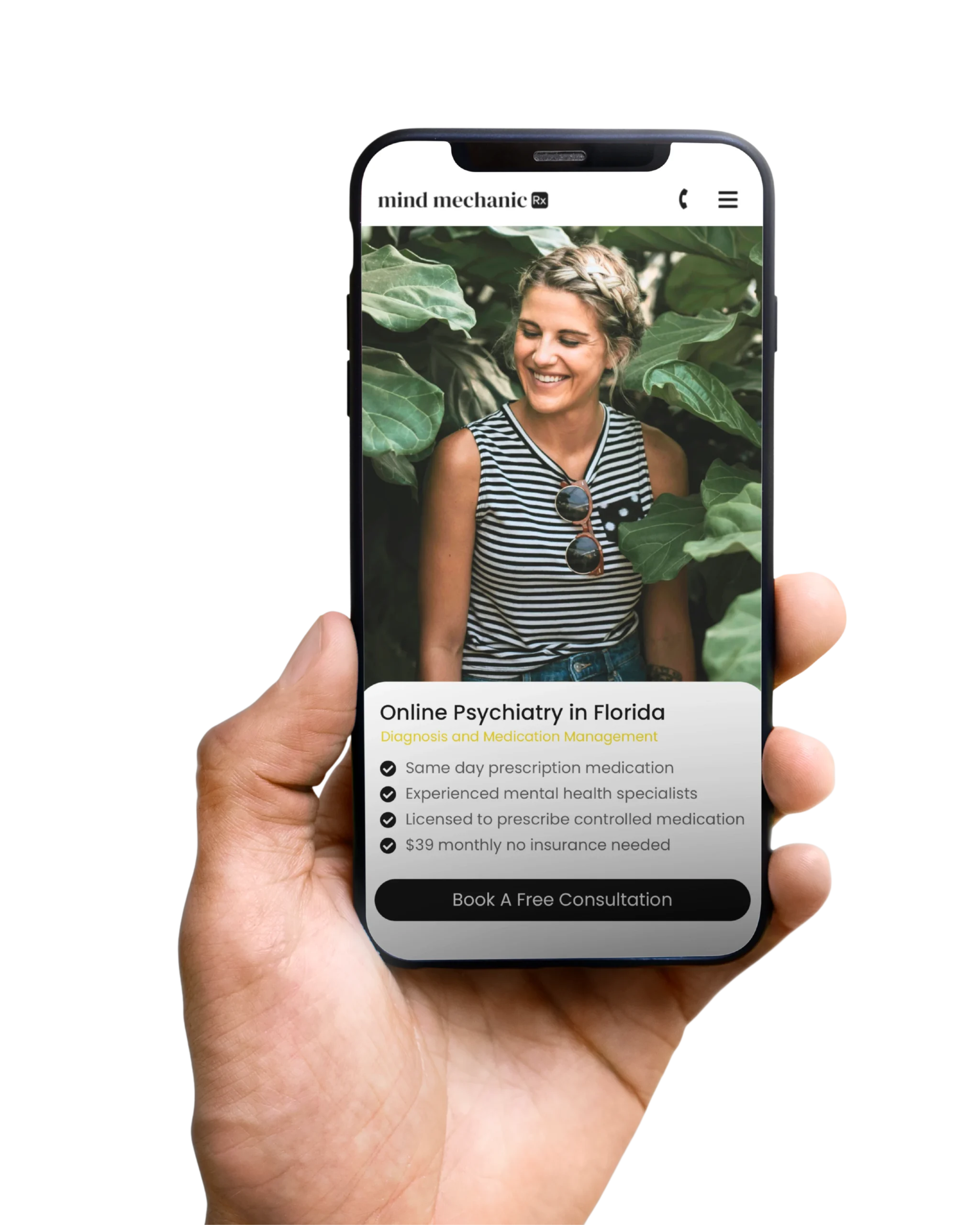
Online care should not mean settling for less. We provide telepsychiatry that is thorough, individualized, and grounded in best practices, delivered through secure video and a streamlined digital experience. Our services extend to patients throughout Broward County. Scheduling is straightforward, visits are focused, and follow up is supported by secure messaging for questions, updates, and coordination. We monitor progress with intention, adjusting treatment as sleep, mood, anxiety, or focus shifts. We emphasize clarity, safety, and shared decision making so patients feel empowered, not rushed. By blending clinical depth with modern access, we make high quality psychiatric care easier to sustain.
It’s time to prioritize your well-being. Start your mental health journey now and take control with convenient, expert psychiatric care from home.
Social anxiety is not simply shyness; it’s the fear of scrutiny that turns conversation into a high-stakes performance. Psychiatry evaluates whether the anxiety is situation-specific or part of broader conditions like panic disorder or depression. Treatment can include CBT with graded exposure, plus medications that reduce baseline threat sensitivity. Patients practice shifting attention outward instead of scanning for internal signs of embarrassment. They also learn to challenge mind-reading assumptions, like “everyone noticed,” and replace safety behaviors with small risks. Improvement often looks like staying present, even while anxious, rather than waiting to feel calm. Over time, competence grows and the body stops treating social moments like danger. Medication is often optional, but it can make exposures feel doable rather than like cliff-jumping.
Wilton Manors is known for its welcoming community, making inclusive mental wellness support especially important. Mental health care should feel safe, affirming, and accessible for people of all backgrounds. Anxiety, depression, and stress can affect anyone, and supportive spaces reduce stigma. Therapy can help individuals explore identity, relationships, and emotional well being with confidence. Compassionate care fosters resilience and connection. A strong mental health foundation allows individuals to thrive personally and socially.
Wilton Manors is known for its vibrant social atmosphere, which can be energizing but also emotionally demanding. Some residents feel pressure to stay constantly engaged, which may lead to burnout or anxiety. Others may struggle with loneliness even in busy environments. Mental health care can help individuals find balance, build emotional resilience, and create routines that support wellbeing while staying connected to community life.
Self discovery and identity exploration can be meaningful but also stressful. Wilton Manors residents may experience anxiety, depression, or emotional uncertainty during major personal transitions. Therapy provides a supportive space to process feelings, build self confidence, and manage stress. Mental health support can help individuals feel grounded and empowered while navigating change, relationships, and personal growth in a healthy way.
Relationship stress can affect emotional health in powerful ways. In Wilton Manors, individuals may face communication difficulties, conflict, or feeling disconnected from partners or family. Therapy can help people improve emotional awareness, strengthen communication skills, and set healthier boundaries. Supportive care often leads to better relationship stability and reduced anxiety or depression symptoms. Healthy relationships play an important role in overall mental wellness.
Yes, anxiety in adults may appear as constant overthinking, restlessness, irritability, or difficulty relaxing. Wilton Manors residents may feel anxious in social settings, at work, or during life transitions. Anxiety can also cause physical symptoms such as tension or fatigue. Mental health treatment can help identify triggers and teach calming strategies. With care, many individuals feel more confident and emotionally balanced.
Depression does not always look like sadness. In Wilton Manors, individuals may continue socializing or working while feeling emotionally numb, exhausted, or disconnected inside. Depression can affect motivation, sleep, and enjoyment of life. Mental health care offers therapy, medication options, and coping strategies that support recovery. Early treatment helps individuals regain energy, connection, and a stronger sense of wellbeing.
Psychiatric care in Wilton Manors typically involves a personalized evaluation of symptoms, lifestyle factors, and emotional history. Providers may help with anxiety, depression, ADHD, bipolar disorder, or insomnia through medication management and supportive treatment planning. Care often includes therapy referrals and coping strategies for daily life. The goal is long term emotional stability, improved functioning, and compassionate support tailored to each individual.
Reviewed by Mind Mechanic Clinical Oversight
Last updated: January 28, 2026
