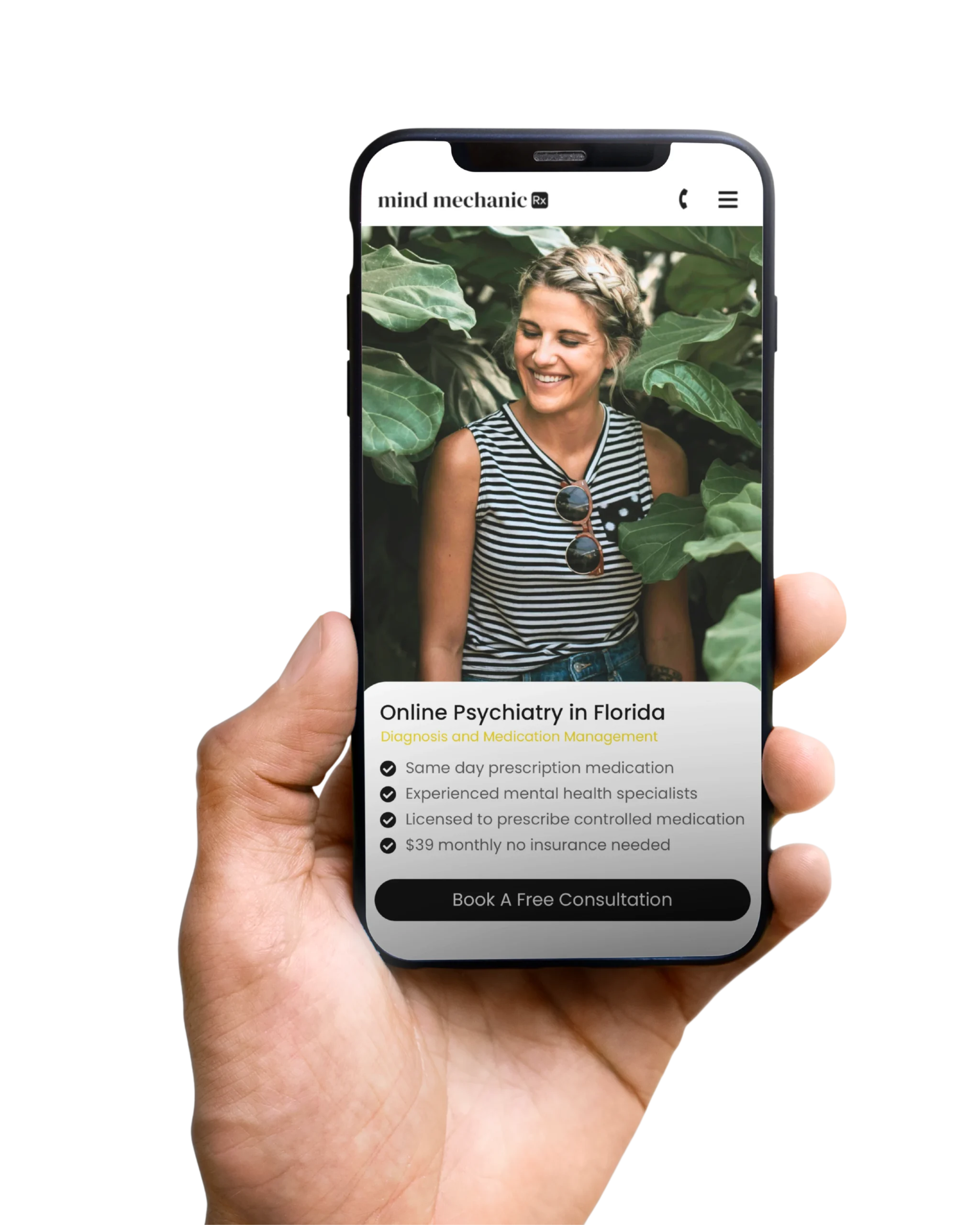
Feeling better
starts now.
Our mental health specialists provide compassionate care and prescribe clinically proven medications to treat ADHD, anxiety, depression, bipolar disorder, and insomnia.
We offer medication management for mental health conditions such as ADHD, anxiety, depression, insomnia, and bipolar disorder.
ADHD can feel like having a mind with many open tabs, where thoughts jump quickly, distractions pull easily, and staying on one task requires extra energy and structure.
Anxiety can feel like mental overdrive, where thoughts race ahead, predicting problems, rehearsing conversations, and treating uncertainty like a threat that must be solved right now.
Depression can feel like emotional anesthesia: you laugh at the right times, but inside nothing lands, and even good news arrives muffled, as if wrapped in thick blankets.
Bipolar disorder can feel like living with changing internal weather, where mood, sleep, and motivation swing dramatically, sometimes bringing intense lows and other times heightened drive.
Insomnia turns bedtime into a negotiation: you promise to relax, your brain demands one more thought, and the pillow becomes a stage where alertness performs until sunrise applause arrives.
Psychiatric care works best when access is reliable and communication is clear. Our online practice is built for people who want expert support without travel, missed work, or waiting months for an opening. You can schedule a secure video visit quickly, meet with a consistent provider, and use secure messaging for follow up questions or symptom updates. We prioritize accurate diagnosis, individualized treatment plans, and careful monitoring for safety and effectiveness. The goal is simple: responsive care that fits real life and evolves as your needs change. Care is available across Broward County for patients seeking online psychiatry.
It’s time to prioritize your well-being. Start your mental health journey now and take control with convenient, expert psychiatric care from home.
Telepsychiatry delivers psychiatric assessment and follow-up through secure video while keeping the same clinical standards. A strong visit still includes history, current symptoms, safety screening, medication review, and a plan that fits the patient’s environment. Privacy matters, so clinicians encourage headphones, a closed door, and a backup phone call if video fails. Telehealth is especially useful for medication monitoring and continuity during travel, work crunches, or childcare seasons. It also helps clinicians observe real-life context, like sleep routines and home stressors. Good clinicians verify location for emergencies and use simple questionnaires to keep care precise over time.
Coconut Creek offers a peaceful environment, yet anxiety can still affect many people behind the scenes. Worry may show up as restlessness, racing thoughts, irritability, or difficulty sleeping. Learning to recognize triggers is a key first step toward feeling more in control. Strategies like grounding exercises, therapy, and healthy lifestyle changes can make a meaningful difference. Support from trusted loved ones also reduces isolation. Mental health care provides practical skills to manage anxiety and improve confidence in daily life.
Coconut Creek residents commonly reach out for support with anxiety, depression, ADHD, mood instability, and sleep concerns. Busy work schedules, family responsibilities, and ongoing stress can impact emotional well-being over time. Mental health care can help individuals better understand symptoms, improve coping skills, and restore balance. Treatment plans may include therapy recommendations, lifestyle strategies, and medication management when clinically appropriate for long-term support.
Psychiatric care can be helpful for Coconut Creek professionals and families managing high demands, burnout, or emotional strain. Support may involve identifying underlying conditions such as anxiety or depression, creating structured treatment plans, and improving daily functioning. Many patients benefit from a combination of therapy, healthy routines, and medication management when needed. Consistent care can lead to better focus, improved mood, and stronger resilience in everyday life.
Telehealth services allow Coconut Creek residents to access psychiatric care through secure video appointments. This option is convenient for those with limited time, transportation barriers, or busy family schedules. Telehealth visits can include evaluations, medication follow-ups, and ongoing mental health support. Many people appreciate the flexibility of receiving care from home while still working closely with a licensed provider to manage symptoms effectively.
Medication management can be an important part of treatment for Coconut Creek patients experiencing conditions like ADHD, anxiety, depression, bipolar disorder, or insomnia. A psychiatric provider carefully evaluates symptoms, medical history, and response to treatment before recommending medication options. Follow-up visits help ensure effectiveness and minimize side effects. When combined with therapy and lifestyle changes, medication management can support long-term stability and improved quality of life.
Chronic stress and emotional exhaustion can affect concentration, sleep, relationships, and overall health for many Coconut Creek residents. Mental health care provides tools to address overwhelm, reduce anxiety, and improve emotional regulation. Treatment may include therapy referrals, mindfulness strategies, boundary-setting skills, and medication support when appropriate. With consistent care, many individuals feel more energized, emotionally steady, and better equipped to handle daily pressures.
A psychiatric evaluation can be helpful when symptoms such as persistent sadness, excessive worry, mood swings, difficulty focusing, or sleep disruption begin interfering with daily life. Coconut Creek residents may seek an evaluation to better understand what they are experiencing and explore treatment options. The process is collaborative and focused on creating a personalized plan. Early assessment often leads to more effective support and improved well-being.
Reviewed by Mind Mechanic Clinical Oversight
Last updated: January 28, 2026
