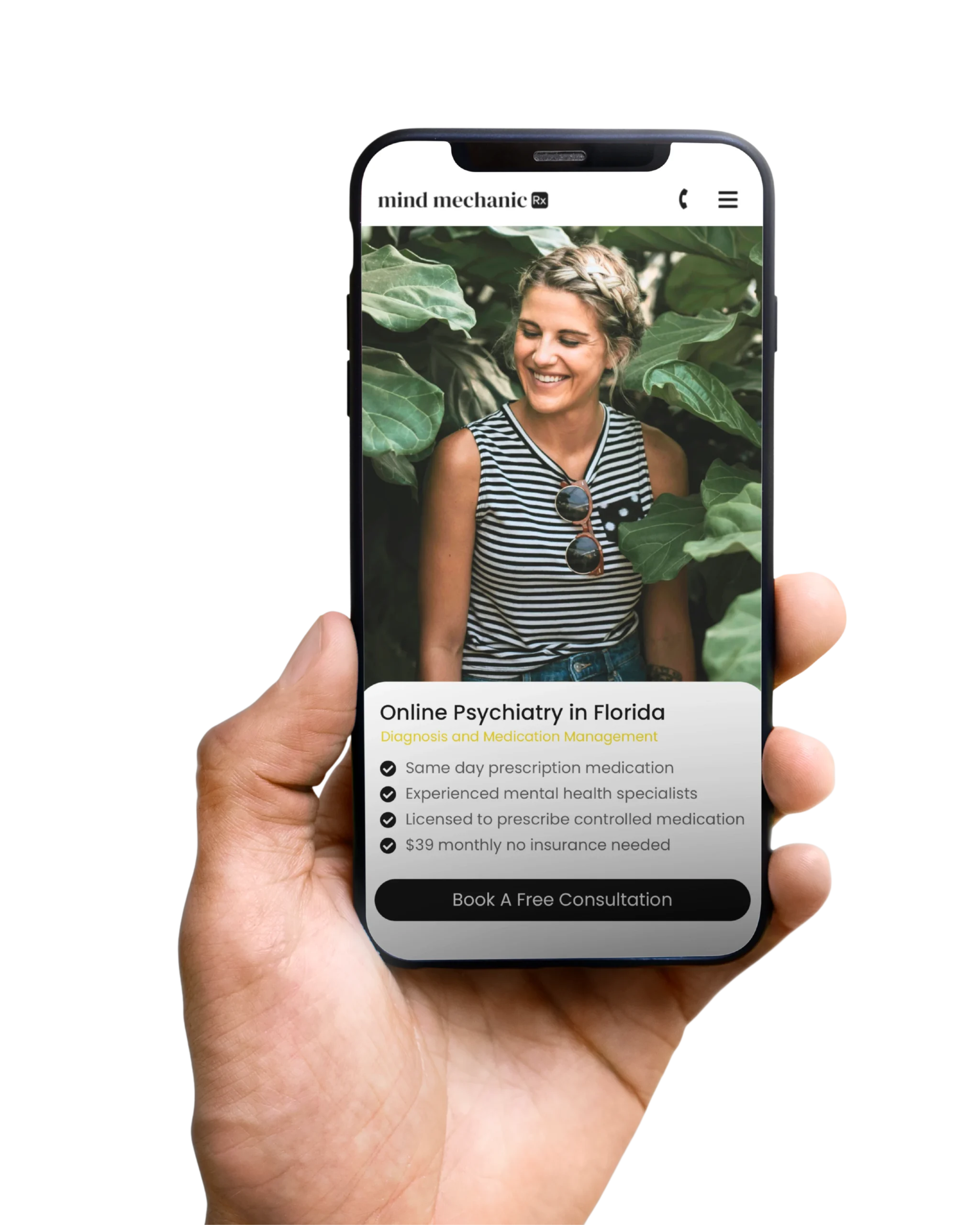
Feeling better
starts now.
Our mental health specialists provide compassionate care and prescribe clinically proven medications to treat ADHD, anxiety, depression, bipolar disorder, and insomnia.
We offer medication management for mental health conditions such as ADHD, anxiety, depression, insomnia, and bipolar disorder.
ADHD can involve difficulty regulating attention, so someone may miss details in conversations, drift during meetings, or struggle to stay engaged without stimulation.
Anxiety is the constant urge to prepare, rehearse, and perfect, because mistakes feel intolerable, and uncertainty feels like a personal failure rather than a human condition.
Depression can twist self-care into self-punishment, where you skip meals, ignore bills, or stop moving, then blame yourself for the very symptoms you’re experiencing.
Bipolar disorder may involve psychosis in severe manic or depressive episodes, where reality testing becomes impaired, requiring urgent medical attention and support.
Insomnia turns mornings into recovery missions: you bargain with snooze buttons, chase coffee, and wear a polite face while your insides feel frayed, threadbare, and thin.
We provide online psychiatry for people who want care that is both modern and meticulous. Virtual appointments make access easier, but our standards remain high: careful assessment, evidence based recommendations, and monitoring for safety and effectiveness. Patients can message their clinician between visits for symptom updates, medication questions, or practical planning, reducing uncertainty and improving continuity. We prioritize clear education, shared decision making, and thoughtful adjustments as needs change. The mission is responsive, high quality care that fits real schedules while maintaining clinical depth. We proudly serve all of Pinellas County.
It’s time to prioritize your well-being. Start your mental health journey now and take control with convenient, expert psychiatric care from home.
Many people arrive with a tangle of symptoms that could fit multiple diagnoses: anxiety, ADHD, trauma, depression, and sleep problems borrowing each other’s clothing. Psychiatry sorts comorbidity by building a timeline: what started first, what worsens what, and what improves with specific interventions. Clinicians also look for medical mimics, medication effects, and substance influences. The goal is not to collect labels, but to identify the central gears driving impairment. Once those gears are treated, the “secondary” symptoms often soften. This approach reduces overmedication and makes therapy targets clearer. Sometimes a clean diagnosis emerges only after sleep is repaired or substances are reduced, so plans stay flexible and evidence-driven. Sometimes treating sleep or trauma first reveals which remaining symptoms truly need medication targeting.
St. Petersburg’s vibrant culture highlights how creativity and connection support mental wellness. Many people benefit from engaging in meaningful activities, supportive communities, and healthy self expression. Depression and anxiety often improve when individuals feel understood and connected. Therapy can help residents explore emotions, manage stress, and strengthen coping skills. Mental health care is not only symptom focused, it is about building fulfillment and stability. Support helps individuals feel more present and hopeful in everyday life.
St. Petersburg’s coastal lifestyle can feel refreshing, but it can also come with unique stressors. Some residents face seasonal mood shifts, work pressure in tourism related industries, or difficulty slowing down in a socially active city. Mental health care can help individuals manage anxiety, depression, or burnout while building routines that support emotional balance. Wellness often involves both enjoying the environment and addressing internal stress.
High functioning anxiety can look like productivity on the outside while feeling overwhelmed internally. In St. Petersburg, individuals may appear successful but struggle with constant worry, perfectionism, sleep issues, or difficulty relaxing. This pattern can lead to burnout over time. Therapy and psychiatric support can help reduce anxious thought cycles, improve coping skills, and create healthier emotional balance without sacrificing personal goals.
St. Petersburg has a strong creative culture, but artists and professionals may experience burnout from constant output and pressure to perform. Creative burnout can involve emotional exhaustion, lack of motivation, self doubt, or feeling disconnected from passion. Mental health support can help individuals restore balance, set boundaries, and rebuild confidence. Treatment may focus on stress reduction, routine building, and addressing anxiety or depression symptoms.
Yes, social comparison can strongly affect mental health, especially in a vibrant city like St. Petersburg where lifestyles are often shared online. Constant exposure to curated images can increase anxiety, low self esteem, or feelings of inadequacy. Mental health care can help individuals develop healthier perspectives, reduce negative thought patterns, and improve self confidence. Building real connection offline is often an important part of emotional wellness.
PTSD symptoms may include intrusive memories, heightened alertness, mood swings, irritability, or avoiding reminders of past trauma. In St. Petersburg, individuals may struggle quietly while still maintaining daily routines. Trauma informed therapy can help process experiences safely and reduce emotional distress. Psychiatric care may also address related anxiety or sleep disruption. With support, many people regain stability and a stronger sense of safety.
Older adults in St. Petersburg may face challenges such as loneliness, grief, health related stress, or changes in independence. Depression and anxiety can sometimes appear differently later in life, including fatigue or withdrawal. Mental health care can provide counseling, medication management when needed, and support for emotional adjustment. Building community connection and maintaining purpose are often key parts of wellness for older adults.
Reviewed by Mind Mechanic Clinical Oversight
Last updated: January 28, 2026
