Feeling better
starts now.
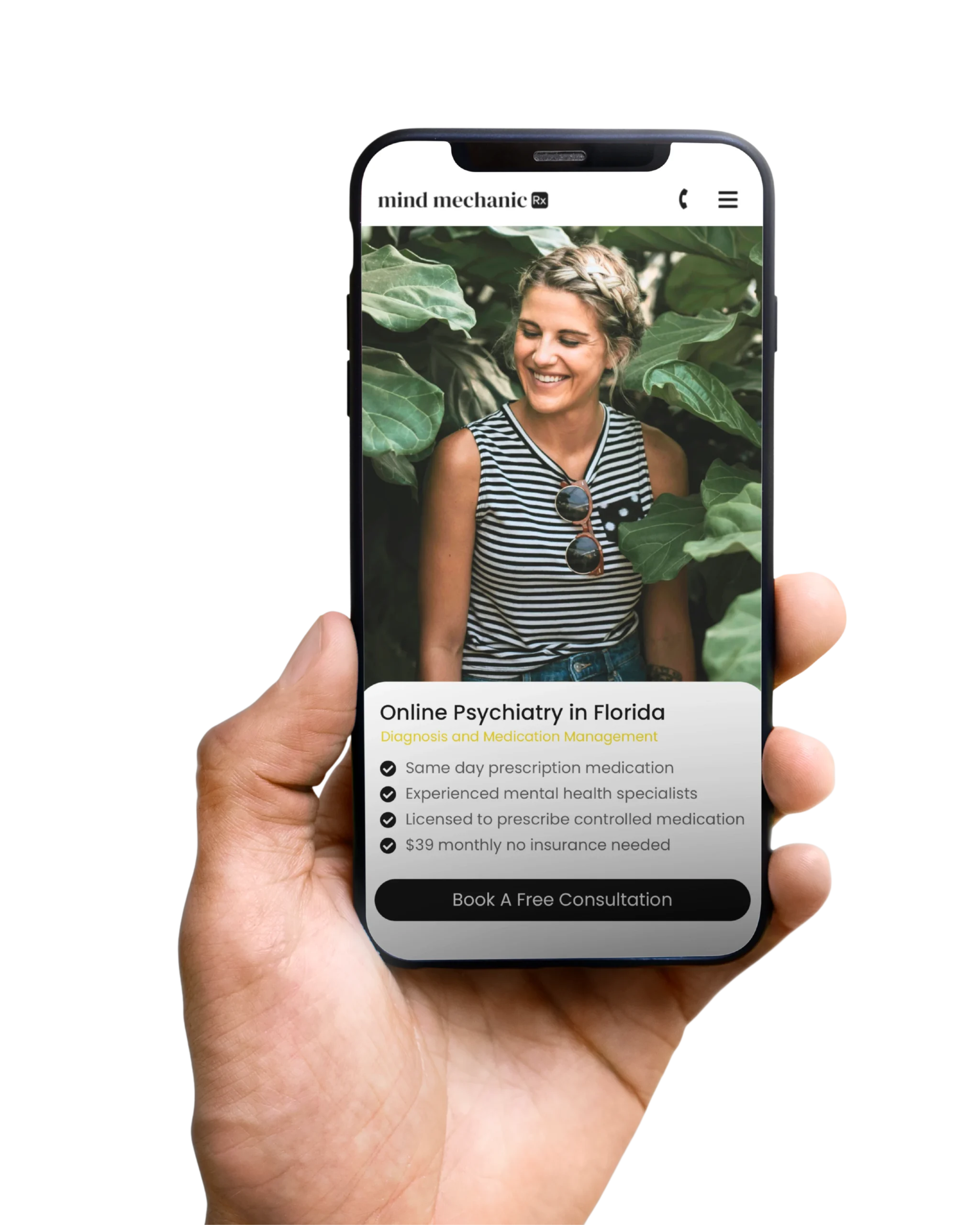
Our mental health specialists provide compassionate care and prescribe clinically proven medications to treat ADHD, anxiety, depression, bipolar disorder, and insomnia.
We offer medication management for mental health conditions such as ADHD, anxiety, depression, insomnia, and bipolar disorder.
ADHD can feel like living with inconsistent focus, where some days are productive bursts and others are scattered, highlighting the need for personalized strategies.
Anxiety can be persistent, affecting mood, sleep, focus, and health, but it’s also treatable, and understanding it is often the first step toward relief.
Depression is not simply sadness; it’s a change in mood, thinking, sleep, energy, and self-worth that lasts, drains function, and makes ordinary living feel unusually hard.
Bipolar disorder is a lifelong condition for many, but with effective management, individuals can build fulfilling lives, relationships, and careers with steadier mood balance.
Insomnia is a persistent difficulty starting or staying asleep, leaving you unrested, edgy, and tired during the day, even when you dedicate enough time and space for sleep.
We designed our telepsychiatry services for people who want expert care without the friction of traditional systems. Secure video visits provide privacy and convenience, while direct messaging keeps you connected to your clinician between appointments. We deliver thorough evaluations, collaborative planning, and monitoring for effectiveness and safety. When helpful, we coordinate with therapy, primary care, and practical strategies that support daily functioning. By removing long waits, travel time, and administrative barriers, we make it easier to begin treatment, stay engaged, and build lasting stability. We proudly serve all of Miami-Dade County.
It’s time to prioritize your well-being. Start your mental health journey now and take control with convenient, expert psychiatric care from home.
A trauma-informed psychiatry visit assumes many patients have lived through experiences that shaped their nervous system, even if they don’t lead with that history. Clinicians focus on choice, collaboration, and transparency, explaining why questions are asked and allowing pauses. This reduces re-traumatization and builds trust, which improves accuracy and adherence. Trauma-informed care also frames symptoms like hypervigilance, dissociation, startle response, and sleep disruption as survival adaptations, not defects. Clinicians prioritize safety, stabilization, and skills before deep processing, and they offer referrals to evidence-based trauma therapies when appropriate. Even small practices matter, like asking permission before sensitive questions or summarizing the plan aloud. When patients feel in control, they’re more likely to share details that change diagnosis and treatment.
Coral Gables is known for high achievement and professional ambition, which can sometimes contribute to stress and perfectionism. Many individuals struggle silently with anxiety or burnout while maintaining outward success. Mental health care helps residents develop balance, self compassion, and healthier coping strategies. Therapy supports mood stability, stress management, and emotional awareness. Prioritizing wellness strengthens both personal fulfillment and long term performance. Support allows individuals to pursue goals without sacrificing inner stability.
Coral Gables is known for professional achievement and busy routines, which can create emotional pressure. Many residents manage demanding careers, academic expectations, and social responsibilities. Over time, this can lead to anxiety, chronic stress, or burnout. Mental health care can help individuals develop coping strategies, improve work life balance, and build healthier boundaries. Emotional wellness often improves when success is paired with rest and support.
Burnout often shows up as emotional exhaustion, low motivation, irritability, and difficulty concentrating. In Coral Gables, professionals may continue performing outwardly while feeling drained internally. Burnout can also affect sleep and physical health. Therapy and psychiatric support can help identify stress patterns, restore balance, and rebuild resilience. Early intervention can prevent burnout from becoming more severe and support long term wellbeing.
Relationship stress can affect mental health, especially when communication breaks down or conflict becomes frequent. Coral Gables residents may experience anxiety, sadness, or emotional tension in partnerships or family life. Therapy can help individuals and couples improve communication, set healthy boundaries, and understand emotional needs. Supportive care strengthens relationships while also improving personal wellbeing and emotional stability over time.
Yes, depression does not always appear as visible sadness. Adults in Coral Gables may experience fatigue, irritability, low motivation, or feeling disconnected despite staying busy. Some individuals struggle quietly while maintaining work and social obligations. Depression can also affect sleep, appetite, and focus. Mental health treatment may include therapy, medication options, and lifestyle support. With care, many regain energy and emotional fulfillment.
Students in Coral Gables may face high academic expectations, which can increase anxiety. Anxiety can cause racing thoughts, test fear, difficulty concentrating, or avoidance of assignments. Over time, it may affect confidence and motivation. Therapy and psychiatric support can help students manage stress, improve coping skills, and build healthier study routines. Addressing anxiety early supports stronger emotional wellbeing and academic success.
Psychiatric care in Coral Gables typically involves a thorough evaluation of emotional symptoms, lifestyle stressors, and personal history. Providers may support conditions like anxiety, depression, ADHD, bipolar disorder, or insomnia through medication management and treatment planning. Care is often collaborative, with therapy referrals and coping strategies included. The goal is long term stability, improved daily functioning, and emotional wellness tailored to each individual.
Reviewed by Mind Mechanic Clinical Oversight
Last updated: January 28, 2026
