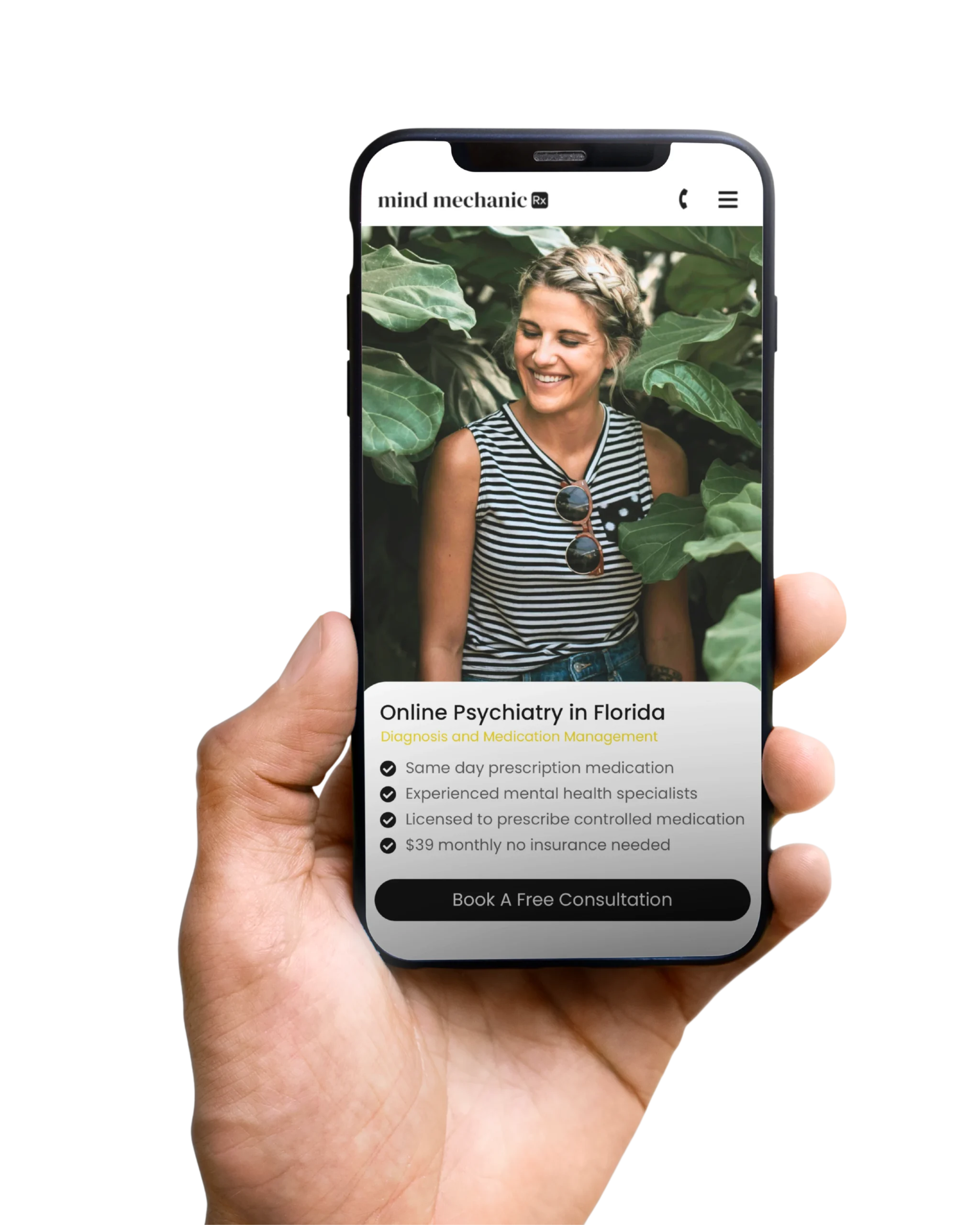
Feeling better
starts now.
Our mental health specialists provide compassionate care and prescribe clinically proven medications to treat ADHD, anxiety, depression, bipolar disorder, and insomnia.
We offer medication management for mental health conditions such as ADHD, anxiety, depression, insomnia, and bipolar disorder.
ADHD is highly treatable, and many people thrive with medication, therapy, coaching, and systems that match how their brain processes focus and motivation.
Anxiety is the sense of urgency without a clear emergency, like your system is stuck in high gear, burning fuel while you’re standing still.
Depression can make decision-making stall, because each option feels equally bleak, and your brain can’t access the sense of possibility that usually fuels choices.
Bipolar disorder is treatable, and many people learn to recognize early warning signs, adjust routines, and maintain stability through ongoing professional care.
Insomnia is a lonely kind of awake, when the world is quiet but you’re lit from within, listening to your own thoughts and wishing for the simple mercy of unconsciousness.
Getting help should not require repeated phone calls or long gaps between visits. Our telepsychiatry practice offers secure virtual appointments, straightforward onboarding, and direct messaging to keep communication open. We focus on thorough assessment, accurate diagnosis, and treatment plans tailored to your goals, with careful medication management when appropriate. Between sessions, you can share updates, ask questions, and address concerns early, improving safety and confidence. By replacing delays with responsiveness, we make care feel more supportive, more consistent, and easier to maintain. We proudly serve all of Orange County.
It’s time to prioritize your well-being. Start your mental health journey now and take control with convenient, expert psychiatric care from home.
Executive function is the brain’s project manager: planning, prioritizing, starting, and finishing. Many psychiatric conditions, especially ADHD and depression, disrupt this system and create chronic overwhelm. Coaching strategies focus on externalizing the brain with calendars, alarms, checklists, and routines that reduce decision load. Psychiatry can pair these tools with medication or therapy so the person has both horsepower and steering. Clinicians also help patients choose “minimum viable systems” that fit their life instead of elaborate plans that collapse after a week. Progress is measured in outcomes: bills paid on time, fewer missed appointments, and smoother mornings. Compassion matters too, because shame can sabotage follow-through as much as distractibility. The best systems are boring, because boring is repeatable when motivation dips.
Winter Park residents often value achievement and community involvement, which can sometimes lead to overcommitment and stress. Mental wellness involves setting boundaries, prioritizing rest, and practicing intentional self care. Therapy helps individuals manage anxiety, depression, and life transitions with structured support. Mindfulness and lifestyle adjustments can improve emotional stability. Creating space for calm within busy routines strengthens resilience. With guidance, residents can maintain balance while continuing to thrive personally, socially, and professionally.
Winter Park is known for its active professional and academic community, which can create pressure to constantly perform. High expectations may contribute to anxiety, perfectionism, or chronic stress. Some individuals feel emotionally exhausted even while appearing successful. Mental health care can help residents manage stress, set healthier boundaries, and develop coping strategies that support balance. Emotional wellness often improves when achievement is paired with self care.
Burnout often develops gradually. Winter Park residents may notice persistent fatigue, irritability, reduced motivation, or difficulty enjoying activities. Burnout can also cause sleep disruption and feeling mentally drained. It may affect work performance and personal relationships. Therapy and psychiatric support can help identify contributing factors, rebuild healthier routines, and restore emotional energy. Early intervention can prevent burnout from becoming more severe or long lasting.
Life transitions such as career changes, moving, relationship shifts, or becoming a parent can be stressful even when positive. In Winter Park, individuals may feel anxious or overwhelmed during these adjustments. Therapy provides a supportive space to process emotions, clarify goals, and build resilience. Treatment often focuses on coping skills, emotional regulation, and maintaining stability during uncertain periods. Support can make transitions feel more manageable and empowering.
Yes, depression does not always appear as obvious sadness. Adults in Winter Park may experience low energy, irritability, difficulty concentrating, or feeling disconnected from daily life. Some continue functioning outwardly while struggling internally. Depression can also affect sleep and motivation. Mental health treatment may include therapy, medication options, and lifestyle support. With proper care, many individuals gradually regain emotional strength and a sense of fulfillment.
Anxiety often disrupts sleep by keeping the mind active at night. Winter Park residents may experience racing thoughts, difficulty falling asleep, or waking frequently. Poor sleep can then worsen anxiety, creating a cycle of exhaustion and worry. Mental health care can address both anxiety symptoms and sleep habits through therapy techniques, relaxation strategies, and medication when appropriate. Better rest supports stronger emotional balance.
Medication management can help individuals experiencing conditions like depression, anxiety disorders, ADHD, or bipolar disorder. In Winter Park, psychiatric providers work closely with patients to choose medications carefully and monitor progress over time. Medication is often combined with therapy and healthy lifestyle strategies for best results. The goal is to reduce symptoms, improve daily functioning, and support long term emotional stability with personalized care.
Reviewed by Mind Mechanic Clinical Oversight
Last updated: January 28, 2026
