Feeling better
starts now.
Our mental health specialists provide compassionate care and prescribe clinically proven medications to treat ADHD, anxiety, depression, bipolar disorder, and insomnia.
We offer medication management for mental health conditions such as ADHD, anxiety, depression, insomnia, and bipolar disorder.
ADHD can make routines hard to maintain, because repetition feels draining, and structure must often be intentional rather than automatic.
Anxiety is feeling unsafe in your own thoughts, where intrusive worries appear uninvited, and you spend energy trying to neutralize them or push them away.
Depression can be quiet, with no dramatic collapse, just steady withdrawal, missed messages, neglected chores, and a growing distance from people who once felt close lately.
Bipolar disorder is influenced by genetics, stress, and brain biology, and it often requires a combination of medication, therapy, and lifestyle structure for stability.
Insomnia can steal the pleasure of evenings, because you begin managing sleep hours early, avoiding plans, dimming lights, and still feeling uncertain whether rest will come.
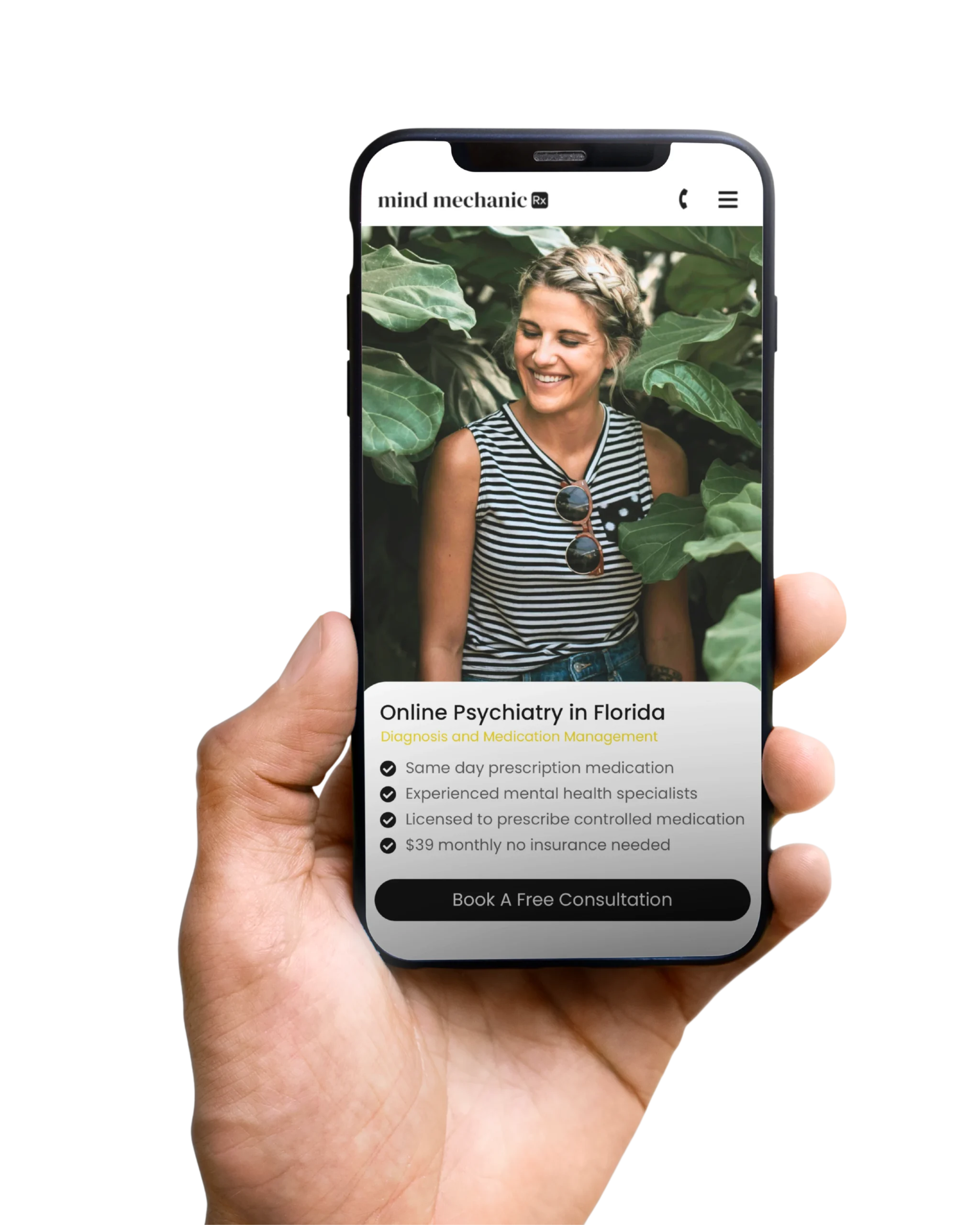
Feeling stuck should not require a waiting room to get unstuck. Our online psychiatry services provide prompt access to clinicians through secure video visits, with a simple digital process from scheduling to follow up. We prioritize careful evaluation, transparent education, and individualized treatment, including medication management when appropriate. Between appointments, secure messaging keeps you connected for guidance, questions, and monitoring so you are not left guessing. By removing common barriers, we help patients stay engaged and supported while progress unfolds in real time. We proudly serve all of Hillsborough County.
It’s time to prioritize your well-being. Start your mental health journey now and take control with convenient, expert psychiatric care from home.
Psychiatry works best when patients are co-authors, not passive recipients. Shared decision-making means discussing options, expected benefits, common side effects, and the trade-offs of doing nothing. A clinician may present a few reasonable paths, such as therapy-first, medication-first, or a combined approach, then align the plan with the patient’s values and schedule. This includes informed consent around tapering, pregnancy, and substance interactions. Shared decisions also reduce “treatment whiplash,” because changes are intentional rather than reactive. Patients can set success markers that matter to them, like fewer panic-driven cancellations or better sleep continuity. When goals are clear, follow-ups become more efficient and less frustrating. That partnership boosts adherence, because people are more likely to follow plans they helped design.
Brandon residents often juggle work demands, family life, and personal responsibilities, which can create chronic stress. Over time, stress may lead to irritability, fatigue, or anxiety symptoms. Mental health support focuses on developing coping strategies such as mindfulness, healthier routines, and therapy. Counseling can help individuals manage overwhelm, improve emotional regulation, and strengthen relationships. Seeking help early prevents stress from escalating. With support, residents can feel more balanced, present, and confident in daily life.
Brandon offers a family friendly suburban environment, but daily life can still feel demanding. Long commutes, busy school schedules, and work responsibilities may contribute to chronic stress or emotional exhaustion. Some individuals experience anxiety, low mood, or difficulty finding personal time. Mental health care can help residents build coping strategies, improve balance, and strengthen routines that support wellness while managing the pressures of modern suburban living.
Parents in Brandon often juggle childcare, school activities, work obligations, and household responsibilities. This constant multitasking can lead to burnout, irritability, anxiety, or feeling emotionally overwhelmed. Some parents also struggle with guilt or difficulty prioritizing self care. Therapy and psychiatric support can provide practical tools for stress management, emotional regulation, and healthier boundaries, helping parents feel more present and supported.
Anger is sometimes a surface emotion connected to deeper struggles such as anxiety, depression, trauma, or chronic stress. In Brandon, individuals may notice increased irritability at home or work, even over small frustrations. This can affect relationships and overall quality of life. Mental health treatment can help uncover root causes, improve coping skills, and teach healthier ways to respond emotionally. Support can lead to greater calm and stability.
Yes, teens in Brandon often face academic pressure, social challenges, and identity development, all of which can affect mental health. Anxiety, depression, ADHD symptoms, or low self esteem may show up during adolescence. Counseling provides a safe space for teens to express feelings, build coping tools, and improve emotional resilience. Early support can strengthen confidence and help teenagers navigate life transitions more successfully.
Untreated anxiety can interfere with everyday life, from work performance to family interactions. In Brandon, individuals may experience racing thoughts, constant worry, trouble sleeping, or physical symptoms like tension and fatigue. Anxiety can also lead to avoidance of social situations or difficulty concentrating. Professional care can help reduce symptoms through therapy, medication options, and coping strategies that restore confidence and emotional balance.
Medication management can be an important part of care for conditions such as depression, anxiety disorders, ADHD, or bipolar disorder. In Brandon, psychiatric providers work closely with patients to find the right medication and dosage while monitoring progress over time. Medication is often combined with therapy and lifestyle support for the best outcomes. The goal is symptom relief, improved functioning, and long term emotional stability.
Reviewed by Mind Mechanic Clinical Oversight
Last updated: January 28, 2026
